
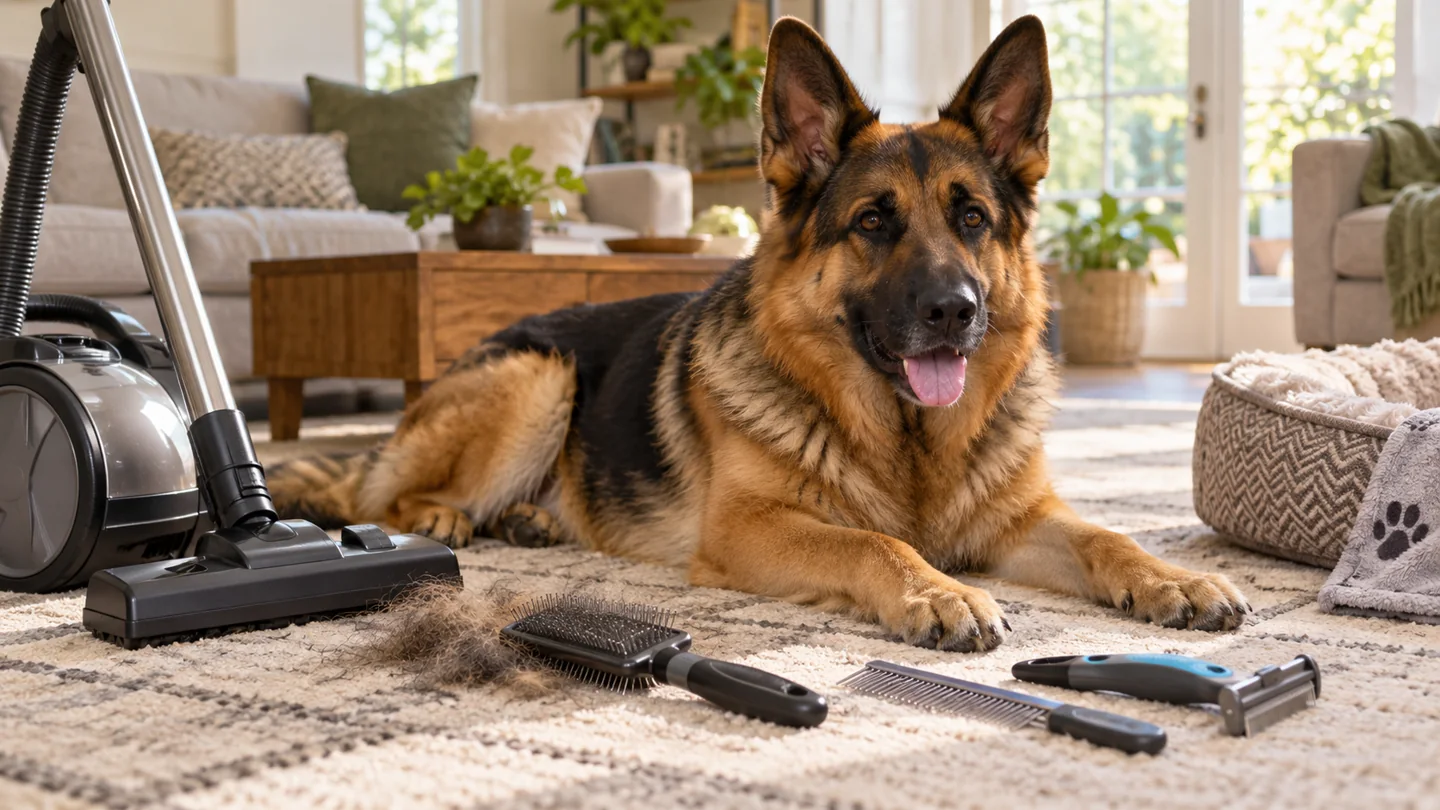
German Shepherd care combines appropriate veterinary care, nutrition, exercise, training, grooming, and a practical home-cleaning routine. Managing shed hair is useful, but a clean floor is not a substitute for checking the dog’s skin, comfort, and health. Build the routine around the individual dog’s age, condition, and tolerance of handling.
This guide connects everyday coat care with the cleaning jobs that matter in a home with a German Shepherd. It avoids fixed bathing, exercise, or feeding rules that may not suit a puppy, an older dog, or a dog with a medical problem.
Understand the coat before choosing tools
German Shepherds have a double coat, and loose undercoat can accumulate around the home. Coat length, seasonal changes, indoor living, and individual variation affect how much grooming and cleanup are needed.
The American Kennel Club’s German Shepherd grooming guide discusses suitable coat and grooming care. Choose tools that remove loose hair without scraping skin or repeatedly cutting through healthy coat.
Ask a groomer to demonstrate technique if you are unsure. A tool that pulls, causes discomfort, or leaves irritated skin is not working well simply because it removes a large amount of hair.
Make brushing a manageable habit
Use short, comfortable sessions and handle the dog gently. Work through accessible areas without forcing the dog to remain in a painful position. Check behind the ears, around friction points, and other areas prone to tangling, while respecting sensitivity.
Collect loose hair as you work so it is not carried through the room. A washable grooming area can simplify cleanup, provided the dog has secure footing. Keep a vacuum switched off and out of the dog’s immediate space during handling.
Brush often enough to manage the actual coat, with extra attention during heavy shedding. Do not assume every dog follows exactly two identical shedding seasons or that vigorous daily brushing is always better.
Know when shedding needs a veterinary check
Loose hair is different from bald patches, persistent scratching, redness, sores, odor, or a sudden unexplained coat change. Seek veterinary advice for those signs rather than buying a stronger vacuum or applying household remedies.
Do not shave the coat solely to reduce floor hair without discussing the reason with a veterinarian or qualified groomer. Coat management and medically necessary clipping are different decisions.
Bathing and drying
Bathe when needed using a suitable dog product and the advice relevant to the dog’s skin. Follow the product instructions, rinse appropriately, and dry the coat in a way that keeps the dog comfortable. Avoid a universal calendar rule or human cleaning products.
If medicated shampoo is prescribed, follow the veterinarian’s directions for application, contact time, and frequency. Do not substitute a household cleaner, essential-oil mixture, or another animal’s treatment.
Prepare towels and a safe nonslip area before starting. Keep electrical cleaning appliances away from wet bathing work, and do not use a normal vacuum to remove water from the dog.
Ears, paws, nails, and teeth
Check accessible areas during normal handling without probing ear canals or forcing painful joints. Redness, discharge, repeated head shaking, limping, or a broken nail deserves appropriate assessment. Ear-cleaning frequency and products should reflect the individual dog’s needs.
Ask a professional to demonstrate nail care if necessary. Avoid cutting into the quick or continuing when the dog is distressed. Inspect paws after walks for debris or irritation and address problems rather than covering them with grooming products.
Dental care needs a veterinary plan and suitable home care. AAHA’s dental-care guidance explains the role of home care and professional assessment. Use dog-appropriate products and introduce handling gradually; do not treat chews as a guarantee against dental disease.
Food, exercise, and preventive care
Discuss diet, portions, body condition, parasite prevention, vaccination, and life-stage needs with the veterinary team. A breed label is not enough to prescribe a calorie amount or a strenuous exercise schedule.
Provide suitable physical activity, rest, and mental engagement through safe walks, training, and enrichment. Adapt activities for development, weather, fitness, and any orthopedic or other health concerns. Do not force exercise through pain or exhaustion.
AAHA’s senior-pet recommendations illustrate why routines should change with life stage. The best plan for a healthy adult may not fit an older dog with mobility limitations.
A cleaning routine for shed hair
- Identify the main hair collection areas: beds, resting spots, upholstery, stairs, and room edges.
- Use washable covers where practical and follow their laundering instructions.
- Vacuum compatible dry hair with tools suited to each surface.
- Inspect brush rolls for wrapping and maintain filters and collection capacity as directed.
- Treat wet accidents separately using appropriate surface care rather than a dry vacuum.
- Adjust frequency to visible accumulation and the dog’s comfort during cleaning.
Our German Shepherd hair vacuum guide compares cleaning options. Evaluate the tools, floor compatibility, emptying, and maintenance as well as the suction claim. No machine eliminates the need to remove wrapped hair or clean upholstery manually.
Keep vacuuming comfortable for the dog
Give the dog a safe place away from the machine and avoid chasing it with the nozzle. If the dog is frightened, manage separation first and use an appropriate gradual behavior plan if needed.
See why dogs may fear vacuums for a calmer approach. A grooming attachment should be used only where the equipment and handling method are appropriate and the dog is comfortable; never force direct suction onto an unwilling dog.
Choose a routine you can maintain
Pair a short coat check with regular handling, keep grooming tools ready, and clean the places where hair actually collects. A robot may help with accessible floor hair, while stairs, furniture, bedding, and concentrated tangles still need manual work.
Our vacuuming schedule guide helps vary the routine by room. During heavier shedding, increase practical cleanup rather than applying powders or perfume to hide the problem.
How often should I bathe my German Shepherd?
Base it on the dog’s coat, skin, activity, and veterinary advice. There is no single interval appropriate for every dog.
Can vacuuming replace brushing?
No. Floor cleaning removes shed hair from the home; appropriate grooming and skin checks address the dog itself.
Will a pet-hair vacuum stop shedding?
No. It is a cleanup tool. Sudden or abnormal hair loss needs assessment of the dog rather than a change in appliance.

Katy James contributes vacuum-cleaner explainers and practical cleaning guidance at GlobVacs. Her published topics include robot-vacuum operation and vacuum airflow. Read her author profile and selected articles.