
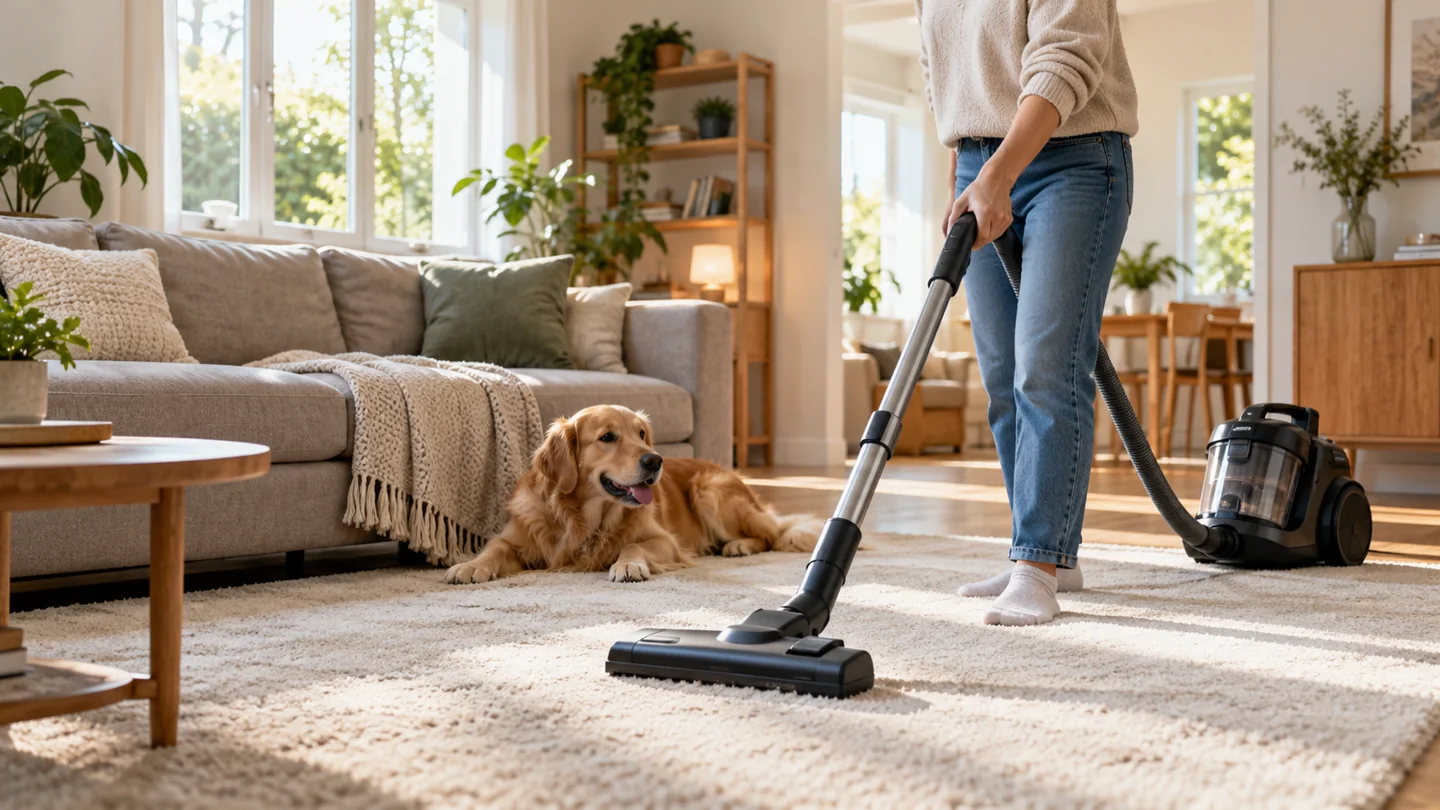
Regular vacuuming removes loose dirt, grit, hair, and some settled dust before they accumulate. Its most dependable benefits are cleaner surfaces, less abrasive debris in carpet and around hard floors, and easier routine maintenance. With suitable filtration and careful handling, it can also help contain some collected particles. It does not sterilize a home, guarantee allergy relief, or replace spill treatment and periodic deeper cleaning.

A useful routine does not require vacuuming every room every day. It means matching the frequency, tool, and technique to the people, pets, flooring, and traffic in your home. This guide explains the benefits you can reasonably expect and how to get them without overworking delicate surfaces or scattering the dust you just collected.
1. Remove grit before it is repeatedly walked into carpet
Entrance areas collect soil carried in on footwear and paws. Once loose particles are walked farther into the home, the cleanup becomes more involved. Vacuuming those routes regularly helps remove material while it is accessible, rather than waiting until the entire room looks visibly dirty.
The Carpet and Rug Institute’s explanation of regular vacuuming emphasizes removing soil that can damage carpet fibers. That is a practical maintenance benefit, rather than a promise that vacuuming will prevent every sign of wear. Furniture pressure, sunlight, installation, fiber type, spills, and use also affect appearance.
Use the carpet manufacturer’s approved head and settings. A brush that is too aggressive for a particular rug can create its own damage. If the nozzle is difficult to move or catches loops, stop and check the instructions instead of assuming stronger resistance means a deeper clean.
2. Keep loose debris off hard floors
Crumbs, hair, and small grains of dirt are easier to deal with before they spread into corners or beneath furniture. A compatible hard-floor tool can collect them without the repeated sweeping and dustpan work that some rooms otherwise need.
Check the underside of the tool first. A vacuum head with grit trapped in a wheel can drag that grit across the finish. Follow the floor maker’s brush restrictions, and do not assume a “hard floor” label approves a rotating brush for every vinyl, laminate, or wood product.
Dry pickup is only one part of hard-floor care. Sticky spills and greasy marks usually need a separate approved cleaning method. Vacuuming a sticky patch repeatedly does not remove the underlying residue and can contaminate wheels or the cleaning head.
3. Reduce the buildup of pet hair and tracked-in debris
A regular route through a pet’s sleeping area, entrance path, and favorite furniture can keep hair from becoming a much larger cleanup. Use an upholstery attachment only where the fabric instructions permit it, and check seams or delicate trim before applying strong suction.
Hair wrapped around a brushroll is not the same as hair successfully collected in the bin. Inspect roller ends and accessible wheels regularly. Long hair, thread, and string can interfere with movement and require careful removal with the machine powered off.
Vacuuming does not replace appropriate pet grooming, laundering washable bedding, or cleaning accidents correctly. If a pet has an unusual change in shedding or skin condition, a vacuum purchase does not address the underlying cause.
4. Help manage settled dust without promising a medical result
The EPA’s guidance on indoor particulate matter identifies cleaning as one way to reduce dust buildup. It also notes that a HEPA filter can help retain some vacuumed dust and that vacuuming can stir particles into the air.
Filtration, housing seals, correct assembly, and emptying technique all matter. A filter cannot capture air that bypasses it through a leak. A well-filtered machine can still release dust when its collection bin is emptied carelessly.
People with asthma or allergies may need to avoid the area while vacuuming is underway, as EPA guidance advises. Cleaning is one part of managing the home environment; it is not a guaranteed treatment for symptoms. Follow the person’s healthcare plan rather than relying on a product’s allergy marketing.
5. Make the next cleaning session easier to plan
Smaller, targeted sessions can be more manageable than allowing debris to accumulate throughout the home. An entrance-and-kitchen pass may be sufficient between more thorough room cleans. This is especially useful when carrying a heavy vacuum or clearing furniture is a practical barrier.
Choose a repeatable route: pick up large objects, clean higher accessible surfaces with the correct tools, then finish the floor. Avoid pushing a full vacuum through several rooms simply because the motor is still running. Empty or replace the collection container at its indicated limit.
A robot can help with accessible floor areas, but it leaves stairs, upholstery, narrow gaps, and manual spot work to you. Its benefit depends on whether you maintain the machine and prepare a route it can finish without frequent rescue.
6. Notice problems while they are still localized
Routine cleaning gives you a regular view of floor edges, rug fringe, furniture legs, and the spaces where debris collects. You may notice a leaking plant pot, a lifted flooring edge, a worn cord, or a patch that remains damp. That observation is useful even when the vacuum itself cannot solve the issue.
Do not vacuum an unknown substance simply to make it disappear. Hot ash, liquids in a dry-only machine, hazardous renovation dust, broken sharp material, and chemical spills need the appropriate handling method and equipment. Stop and identify the material first.
Benefits that should not be overstated
| Claim | More accurate expectation |
|---|---|
| Vacuuming kills germs | It removes material; ordinary vacuuming is not a validated disinfection process |
| Vacuuming prevents every pest infestation | It may remove some debris and pests, but identification and a complete control plan may still be needed |
| Vacuuming removes all odors | It can remove some odor-carrying debris; moisture, contamination, and the source need separate treatment |
| Daily vacuuming is necessary everywhere | Frequency should reflect traffic, debris, pets, and flooring instructions |
| Vacuuming guarantees higher property value | It contributes to ordinary maintenance; a specific resale benefit is not established here |
The CDC distinguishes cleaning from disinfecting. Use that distinction when deciding what a mess requires. Do not spray disinfectant into a vacuum or onto a filter unless the appliance instructions specifically prescribe it.
Build a routine around your home
Begin by identifying the areas that visibly collect debris fastest: entrances, food-preparation areas, carpeted walkways, and pet zones. Check them more often than quiet rooms. After a week or two, adjust the schedule based on what remains between cleans rather than treating a calendar rule as universal.
For example, a household might clean the entrance and kitchen frequently, vacuum the main carpeted rooms on a regular weekly route, and rotate less-used rooms through that schedule. That is a planning example, not a requirement for every home. Our guide to how often to vacuum helps refine the decision.
Account for drying after professional carpet cleaning, treatment instructions after pest control, and any floor-specific limitations. More frequent use is not helpful if the carpet is still wet or the tool is unsuitable.
Technique makes the routine worthwhile
- Prepare the floor. Pick up cables, coins, loose toys, and other objects that can obstruct or damage the intake.
- Use the right head. Match brush action and suction to the surface instructions.
- Move deliberately. Give the head time to collect debris, with overlapping passes where needed.
- Reach the missed places. Use suitable attachments for edges and accessible furniture gaps rather than forcing the main head.
- Contain the collected dirt. Replace bags or empty bins carefully, and refit all required components.
- Maintain the airway. Follow the model-specific instructions for filters, rollers, hoses, and seals.
If the machine leaves debris behind, address the cause before increasing cleaning time. A blocked hose, incorrect head setting, or tangled roller can turn a regular routine into repeated ineffective passes. See how to clean and maintain a vacuum for a structured approach.
Frequently asked questions
Is vacuuming better than sweeping?
It depends on the surface, debris, and available tool. Vacuuming is essential for many carpet-cleaning routines and can work well on compatible hard floors. A broom or dust mop can be more convenient for a small suitable dry mess. Our vacuuming versus sweeping guide compares those situations.
Will vacuuming remove a musty smell?
Not reliably. Find the source, especially if the area is damp. A vacuum cannot correct a leak or remove moisture from flooring. Do not conceal a persistent odor with powders or fragrance inside the appliance.
Can you vacuum too often?
Frequency alone is not the only issue. An unsuitable brush, damaged head, excessive force, or incorrect setting can harm a surface. Follow the flooring care instructions and adjust the routine to actual debris.
A useful habit with realistic limits
Regular vacuuming works best as part of a broader routine: contain tracked-in soil, treat spills promptly, maintain the machine, and clean each material with compatible tools. The goal is consistent removal of ordinary debris, without making health, pest-control, or floor-restoration promises the appliance cannot support.

Abi Khan is the founder and a content writer at GlobVacs. His published work covers vacuum-cleaner buying guides, product comparisons and practical maintenance advice. Read his author profile and selected articles.