
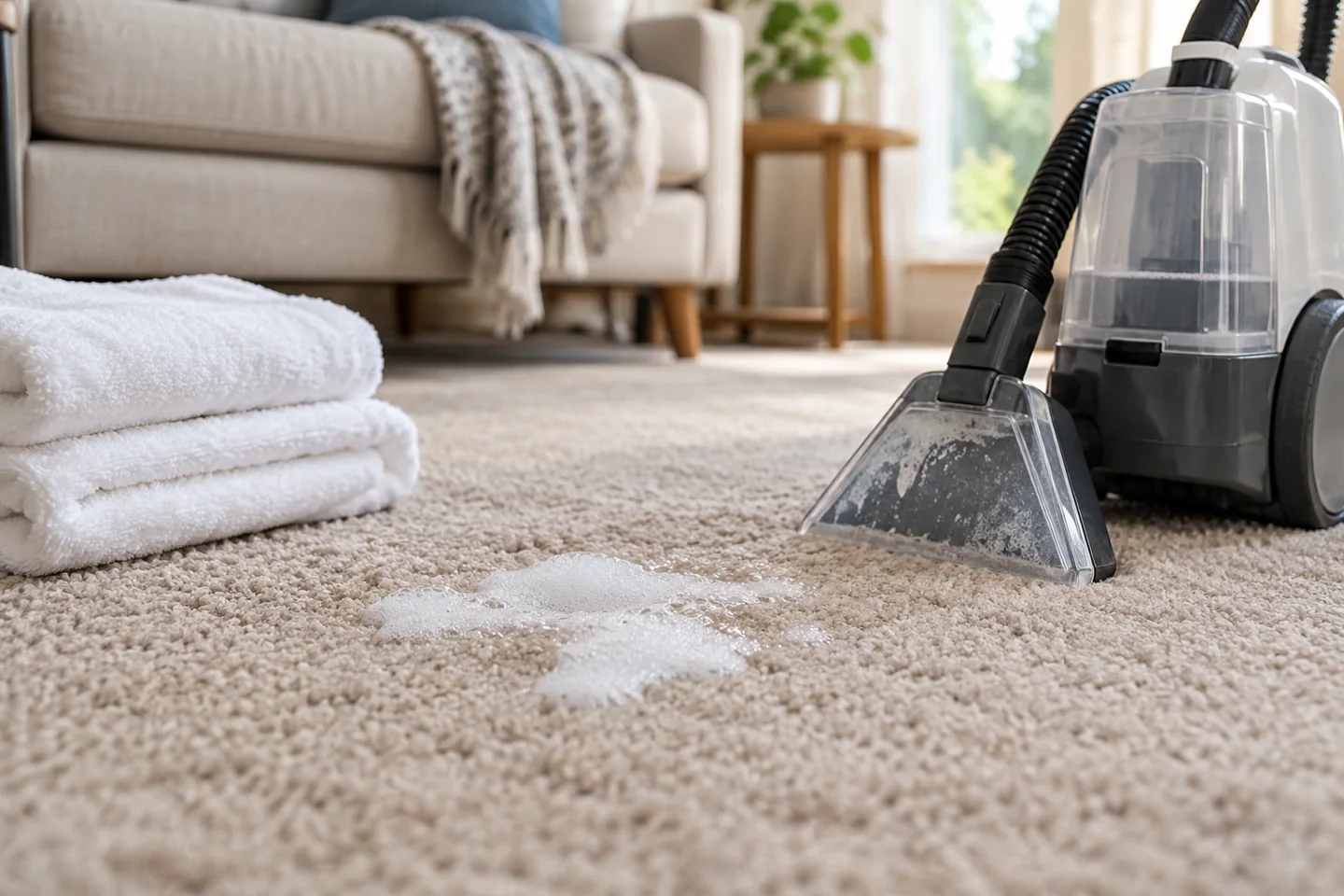
To get soap out of carpet, lift off excess product, blot the spill, and use a carpet-approved rinse-and-extraction process that removes residue without soaking the backing. An ordinary dry vacuum does not extract dissolved soap or wet foam. For a large spill, sensitive carpet, or persistent suds, contact a qualified carpet cleaner before adding more water.

The right method depends on what spilled and what the carpet can tolerate. Hand soap, washing-up liquid, shampoo, laundry detergent, and carpet-cleaning solution are different products. Some contain dyes, oils, disinfectants, or additives that make the problem more than a simple water-soluble residue.
First identify the product and the carpet
Keep the container or take a photograph of its label. Note the approximate amount spilled, how long it has been there, and any treatment already used. Check the carpet manufacturer’s spot-cleaning instructions, including restrictions for wool, natural fibers, color, backing, and installation.
The Carpet and Rug Institute cleaning guidance is a useful starting point for routine care. It does not replace instructions for a particular fiber or a large chemical spill. A rug laid over wood also needs attention underneath; treating the pile while leaving moisture against the floor creates a second problem.
Contain the spill before spreading it
- Keep people, pets, and a scheduled robot vacuum away from the area.
- Lift thick product gently with a suitable blunt edge, working without scraping or pulling fibers.
- Blot liquid with clean, absorbent white cloths. Move to a clean section as it becomes loaded.
- Work from the edges toward the center. Avoid rubbing, brushing vigorously, or driving the spill deeper.
- Check whether the affected area extends beyond the visible patch, especially after a substantial spill.
Do not start by pouring a bucket of water onto the carpet. That can spread detergent into a larger area, generate more foam, and wet the backing or cushion. Reducing the amount of concentrated product first makes subsequent treatment more manageable.
Use controlled rinsing, not repeated saturation
For a small spill on a carpet whose care instructions permit water-based spot treatment, test the approved method in an inconspicuous location. Use controlled moisture and blot with fresh cloths as directed. The aim is to transfer residue out, rather than dilute it across a wider patch.
Do not assume that hotter water works better or that every carpet needs a vinegar rinse. Unknown chemistry, dyes, fiber sensitivity, and existing treatments make universal recipes unreliable. Adding another detergent to remove detergent can increase the residue burden.
Stop if color transfers, texture changes, the wet area expands, or repeated careful treatment is not reducing the problem. A professional can assess whether controlled extraction is appropriate and whether backing or cushion has been affected.
When an extraction machine may help
A carpet extractor is different from a dry vacuum. It applies and recovers liquid through an approved cleaning system. Both the carpet and the machine must permit the proposed rinse process. Follow the exact machine manual for tank contents, recovery, foam, and any rinse-only function.
Excess foam can interfere with recovery. Do not keep operating a machine with abnormal foaming or liquid carryover. Do not add oil, salt, fabric conditioner, or an improvised defoamer to its tanks. Only use a product or procedure explicitly approved by the equipment manufacturer.
BISSELL’s stain guidance discusses residue and problems associated with excess unextracted water. The practical lesson is to control application and recovery, not simply increase the amount of cleaning solution.
Why a dry vacuum is not the soap-removal step
Waiting until the surface looks dry and vacuuming repeatedly is not a dependable way to remove detergent from carpet fibers. Soap can remain as a film rather than a loose particle. Vacuuming may lift ordinary dry debris while leaving that film behind.
Do not use a dry household vacuum on damp carpet, liquid, or wet suds. A wet/dry machine also needs an appropriate configuration and explicit permission for the material; the words “wet/dry” do not guarantee that a machine handles foaming detergent well.
Once the carpet is suitably dry and its aftercare allows it, normal compatible vacuuming can resume. See when to vacuum after carpet cleaning for the difference between surface appearance and readiness.
Check the result after drying
Assess texture and appearance after the treated area is fully dry. Persistent tackiness, stiffness, a ring, unusual odor, or faster resoiling can justify another assessment. Do not automatically repeat the same treatment indefinitely; the remaining issue may be residue deeper in the carpet or a different ingredient in the spill.
A crunchy feel is not proof that more vacuuming is needed. Our crunchy-carpet diagnostic guide separates residue from loose debris and possible installation problems. Tell a cleaner exactly what you applied so they can choose a compatible next step.
Manage drying without creating another problem
Follow the carpet or cleaning provider’s drying instructions. Suitable ventilation and airflow may help, but room conditions and the depth of wetting matter. Keep traffic off the area as advised, and do not put furniture or a rug over it to hide a wet patch.
If the cushion is wet, moisture persists, an odor develops, or a large area was saturated, seek professional advice promptly. Do not perfume the carpet or add baking soda as a substitute for addressing moisture. Wet carpet and mold concerns require a different decision from normal cosmetic spot cleaning.
Prevent repeat residue problems
- Store concentrated cleaners away from carpeted areas and use stable containers.
- Measure approved carpet-cleaning formula accurately instead of adding extra for a “stronger” clean.
- Keep recovery tools and tanks maintained so extraction works as intended.
- Record products used on a stubborn spot rather than layering treatments from unrelated recipes.
- Build routine dry-soil removal into your carpet-care plan.
Frequently asked questions
Can I remove dish soap with more carpet shampoo?
Do not assume that adding another cleaner will solve a detergent spill. Follow the carpet and extraction-equipment instructions or ask a professional to select a suitable rinse process.
Is vinegar necessary?
No universal vinegar recipe is appropriate for every carpet and soap. Avoid mixing household chemicals or applying an acid simply because a spill feels slippery.
What if the carpet still foams after several attempts?
Stop repeated wetting and arrange an assessment. Explain the product, quantity, treatment history, and whether the backing or cushion may be wet. More water without effective recovery can make the affected area larger.

Katy James contributes vacuum-cleaner explainers and practical cleaning guidance at GlobVacs. Her published topics include robot-vacuum operation and vacuum airflow. Read her author profile and selected articles.