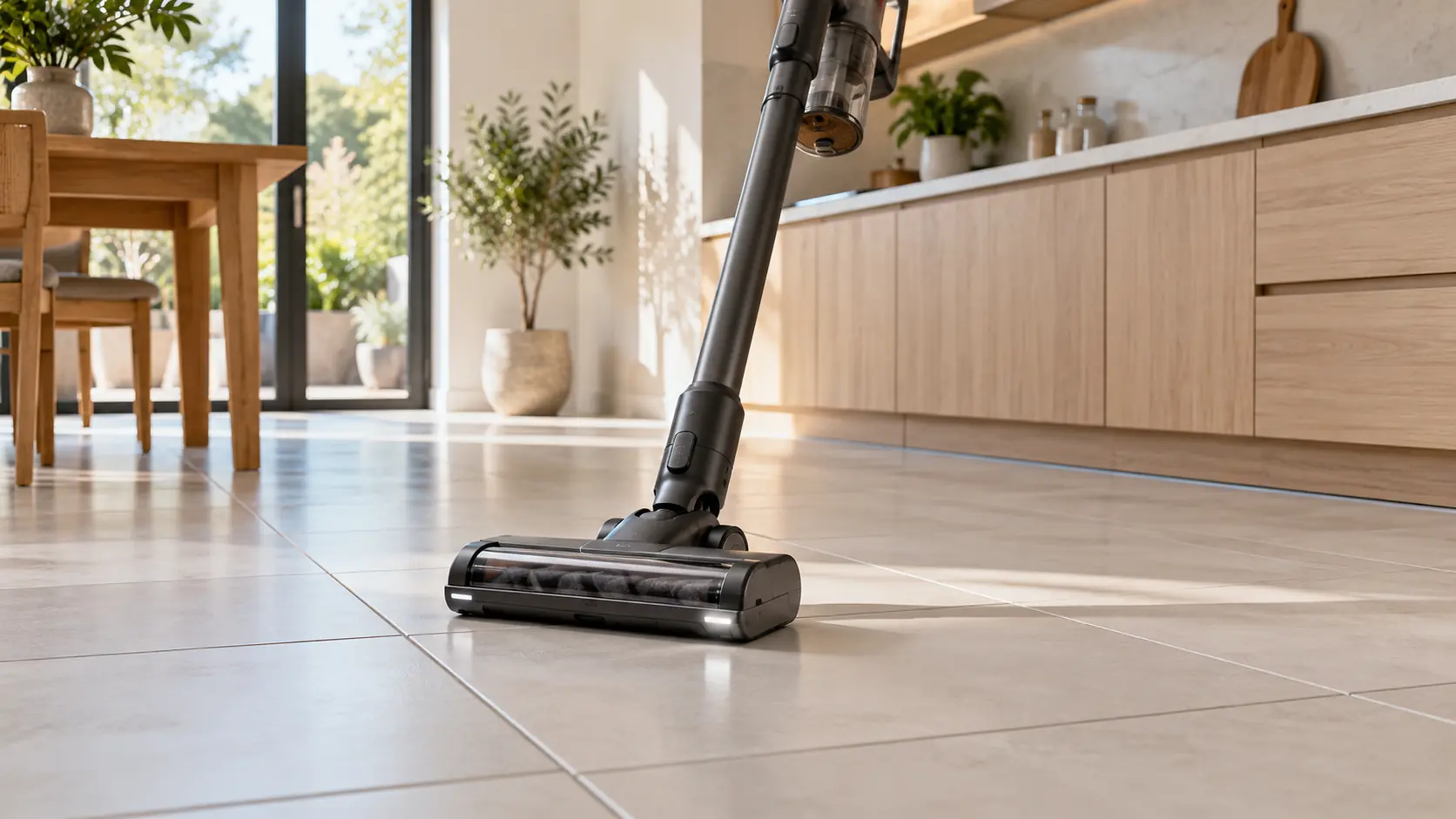
The best vacuum for tile floors should collect loose grit without scattering it, reach debris along edges and grout lines, and use a floor head suitable for the surface. The eight options below include cordless sticks, an upright, a canister, and a robot. Choose by the size of your tiled area and your other flooring, rather than assuming the most powerful or expensive model is automatically the best fit.
Tile cleaning is easier to plan when you separate loose grit on the surface, debris in recessed grout and residue that needs a permitted washing method. The eight choices serve different household routes; no single suction number describes all three tasks.
Affiliate disclosure: As an Amazon Associate I earn from qualifying purchases.
Quick verdict: For dry tile and grout maintenance, compare Levoit LVAC-200, BISSELL Zing 2156A and Miele C1 Pure Suction before paying for a larger station. The Samsung and Dyson options serve broader household use; Roborock S7 MaxV Ultra automates suitable prepared floors, and Kenmore 81714 serves mixed tile and carpet.
Compare the options
Compare the cleaning configuration and ownership trade-off. On a small screen, scroll the table sideways.
| Product | Best fit | Important limit | Amazon |
|---|---|---|---|
| Samsung Bespoke Jet | Convenient cordless cleaning and station storage | Premium station needs space; verify the exact bundle | Check Price |
| Dyson V8 | Cordless spot cleaning and above-floor jobs | Powered tools and higher modes reduce maximum runtime | Check Price |
| Levoit LVAC-200 | Quick cordless dry pickup on permitted tile | Battery and small collection cup need regular attention | Check Price |
| Roborock S7 MaxV Ultra | Automated maintenance and damp mopping | Needs floor preparation, dock space, and regular upkeep | Check Price |
| Dyson Ball Animal 3 Extra | Homes combining tile with substantial carpet | Larger upright format; use the correct floor setting | Check Price |
| BISSELL Zing 2156A | Simple suction-only dry tile cleaning | Bagless disposal and trailing hose need consideration | Check Price |
| Miele Classic C1 Pure Suction SBAN0 | Bagged non-powered floor-tool route | Pure Suction package is not a powered-carpet system | Check Price |
| Kenmore Elite 700 Series 81714 | Mixed surfaces and hose-based cleaning | Larger storage footprint than a cordless stick | Check Price |
Jump to a section
How we selected these options
We prioritized identifiable models and the head, airflow path and collection format used for dry debris. The ORFELD, Girnoor and INSE listings were replaced with documented LVAC-200, Zing 2156A and C1 Pure Suction configurations. This is research-based selection without measured grout pickup, scratch resistance or side-by-side runtime tests. Dry floor tools and wet cleaning solve different tasks, and a motor input or suction-pressure headline is not a complete pickup comparison.
1. Samsung Bespoke Jet — Convenient cordless cleaning and station storage

Key features
- Cordless stick with a collection station
- Station and accessory package vary by region
- Dry floor-cleaning format
Samsung Bespoke Jet Cordless Stick Vacuum Cleaner is worth considering for a home with substantial tile flooring and a dedicated place for its charging and emptying station. The convenience is most useful when you vacuum frequently and want the machine ready between sessions. It can also help with mixed flooring when supplied with appropriate heads.
Samsung rates the original Bespoke Jet at up to 210W of suction. Exact specifications and accessories depend on the linked model. Prioritize the floor head, handling, and maintenance over an inflated power figure. It remains a dry vacuum, not a spill extractor.
Reasons to consider it
- Convenient cordless cleaning and station storage
Trade-offs
- Premium station needs space; verify the exact bundle
2. Dyson V8 — Cordless spot cleaning and above-floor jobs

Key features
- Cordless stick with handheld conversion
- Dry pickup; no liquid collection
- Floor tool depends on the exact package
Dyson V8 Cordless Vacuum is useful for everyday grit and crumbs, particularly when you also need to clean stairs, upholstery, and shelf edges. Its handheld conversion gives it more flexibility than a floor-only cleaner. For a modest tiled area, that can be more useful than buying the biggest machine on the list.
Check the cleaner head and accessories included with the specific V8 package. An up-to-40-minute claim applies under stated test conditions; do not plan a whole-house session on the assumption that every powered-tool setting delivers that duration. Avoid liquid spills and sharp material that the manual excludes, and inspect the head for lodged grit before cleaning delicate finishes.
Reasons to consider it
- Cordless spot cleaning and above-floor jobs
Trade-offs
- Powered tools and higher modes reduce maximum runtime
3. Levoit LVAC-200 — Quick cordless dry pickup on permitted tile
Key features
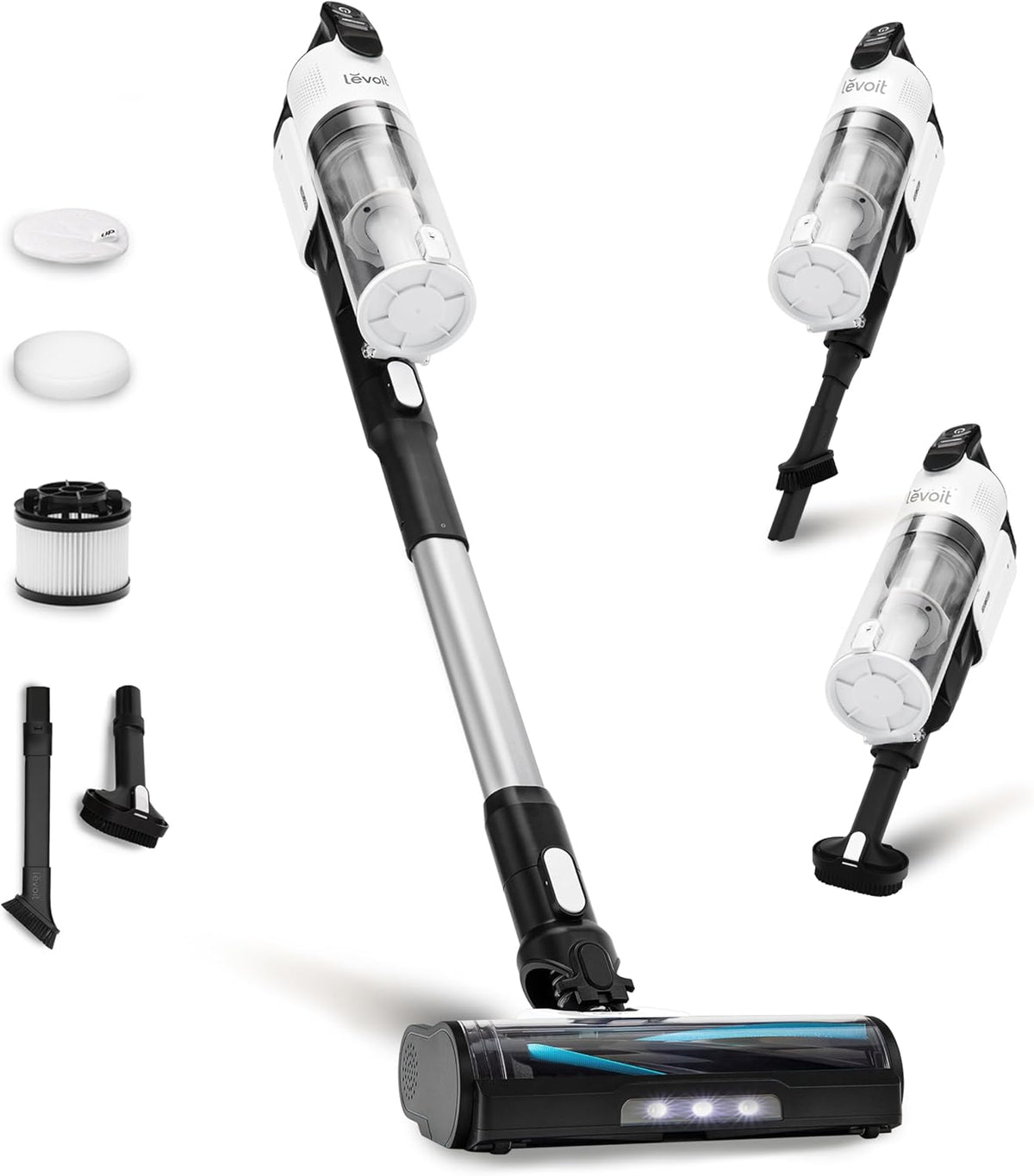
- Cordless stick and handheld formats
- Detachable battery and powered floor head
- Up to 30 minutes with floor head in Eco mode
- Up to 50 minutes with small tool in Eco mode
LVAC-200 gives this list an identified cordless model with a documented floor-head runtime rather than an unspecified stick name. The benefit on tile is quick access for recurring crumbs, hair and entrance grit. Its handheld form also reaches edges and furniture where a full-size floor head cannot fit.
The powered head is not permission to push over a large sharp fragment. Remove unsuitable pieces first and inspect the wheels and inlet if debris starts scattering. Use a suitable small tool beside skirting and along accessible recessed grout, without scraping a hard plastic edge against a delicate finish.
Choose this over a canister when frequent short sessions and moving between levels are central to the routine. Choose a corded canister instead when continuous operation, a separate non-powered head or your preferred disposal arrangement matters more. The LVAC-200 is a dry cleaner; floor washing and a sticky film require a separate approved method.
Reasons to consider it
- Quick cordless dry pickup on permitted tile
- An identified model and cleaning configuration
Trade-offs
- Battery and small collection cup need regular attention
4. Roborock S7 MaxV Ultra — Automated maintenance and damp mopping

Key features
- Mapped robot with exclusion controls
- Ultra dock adds emptying and mop-maintenance functions
- Suitable indoor surfaces only
- Household robot; not a workshop dust extractor
Roborock S7 MaxV Ultra Robot Vacuum can maintain a relatively clear tiled floor between manual cleaning sessions. Mapping and app controls help define where it should clean, while sonic mopping and the Ultra dock add convenience for appropriate sealed hard floors. This is useful in open areas where the robot can move without repeated intervention.
Do not expect it to remove every grout stain or clean behind every obstruction. Cords, small objects, and unsuitable debris still need to be removed. Robot and dock variants differ, so confirm the Ultra package rather than assuming all S7 MaxV listings include the same station. Clean the mop, filters, wheels, and dock regularly.
Reasons to consider it
- Automated maintenance and damp mopping
Trade-offs
- Needs floor preparation, dock space, and regular upkeep
5. Dyson Ball Animal 3 Extra — Homes combining tile with substantial carpet

Key features
- Corded upright for compatible mixed floors
- Bagless collection and hose tools
- Full-size body requires lifting and storage space
Dyson Ball Animal 3 Extra Upright Vacuum Cleaner makes more sense in a mixed-floor home than in a small tile-only apartment. The corded upright format avoids battery scheduling and suits longer sessions, while its hose and tools cover above-floor jobs. Its bulk is the main compromise when moving between rooms or storing it.
Use the cleaner-head settings specified by Dyson for the floor and debris. Do not describe this model simply as a self-adjusting head without checking its actual controls. Keep the wheels and underside clean, and test its handling on your tile finish. A large upright is not automatically more convenient than a lighter stick on bare floors.
Reasons to consider it
- Homes combining tile with substantial carpet
Trade-offs
- Larger upright format; use the correct floor setting
6. BISSELL Zing 2156A — Simple suction-only dry tile cleaning
Key features
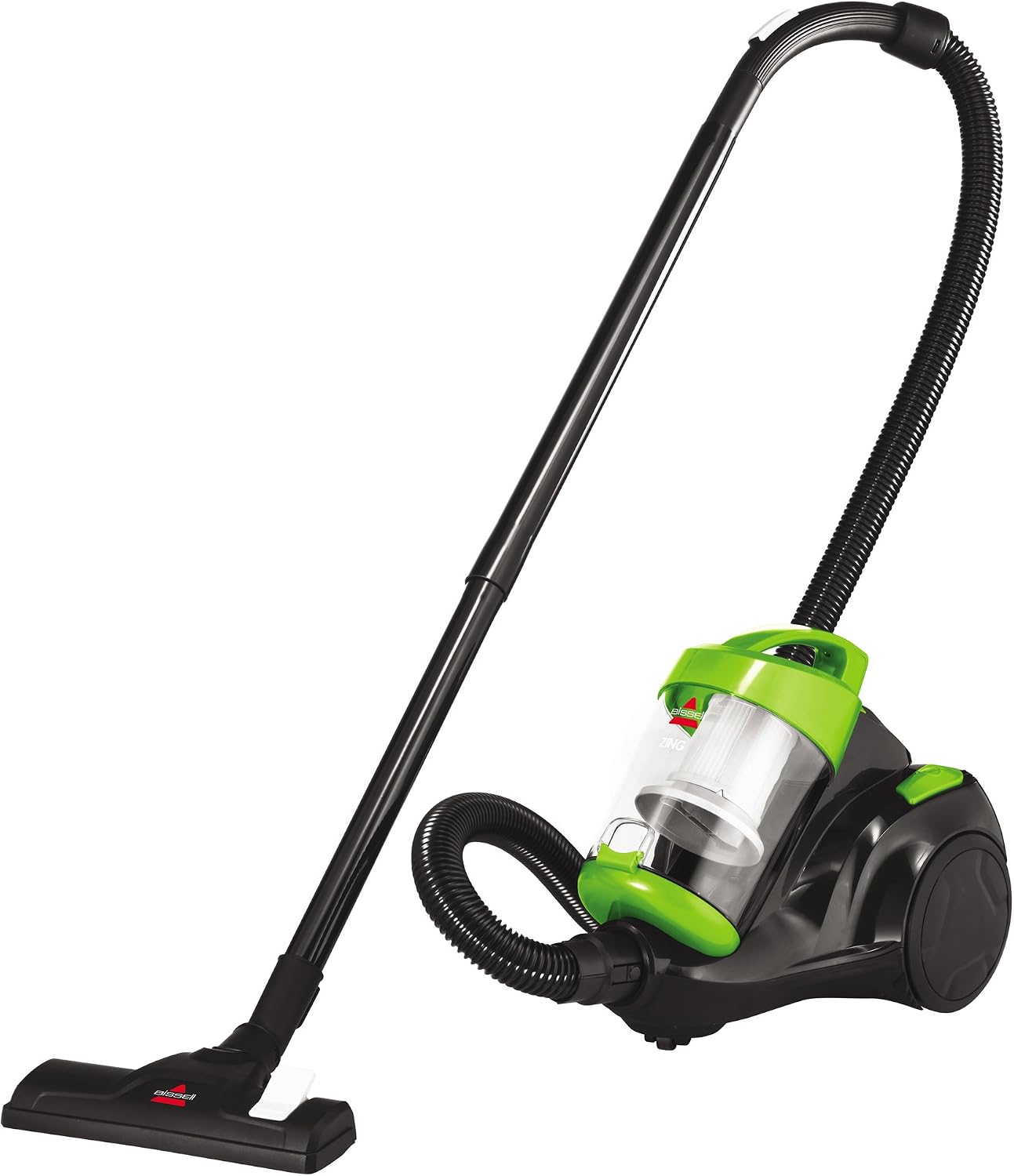
- Suction-only combination floor tool
- Bagless canister with hose and wand
- Airflow adjustment at the handle
- Cord rewind and reusable collection cup
BISSELL Zing 2156A is a bagless canister with a suction-only combination floor tool. That provides a useful alternative when the tile itself does not need powered agitation. The body stays on the floor while a separate hose and wand reach under and around furniture.
Its basic format is most appealing for dry grit and household crumbs where an outlet is available. Match the floor-tool position to the intended surface and use the handle’s airflow adjustment as directed. A narrow tool is useful along an edge, but it should not be dragged forcefully across a vulnerable glazed or decorative tile.
Compared with the C1, Zing avoids recurring dust-bag purchases but requires cup disposal and filter care. Compared with a cordless stick, it avoids a charging cycle while adding a trailing body, hose and cord. Choose by that complete workflow. Neither low purchase cost nor the absence of a rotating floor brush makes dirty wheels harmless, so inspect the contact surfaces routinely.
Reasons to consider it
- Simple suction-only dry tile cleaning
- An identified model and cleaning configuration
Trade-offs
- Bagless disposal and trailing hose need consideration
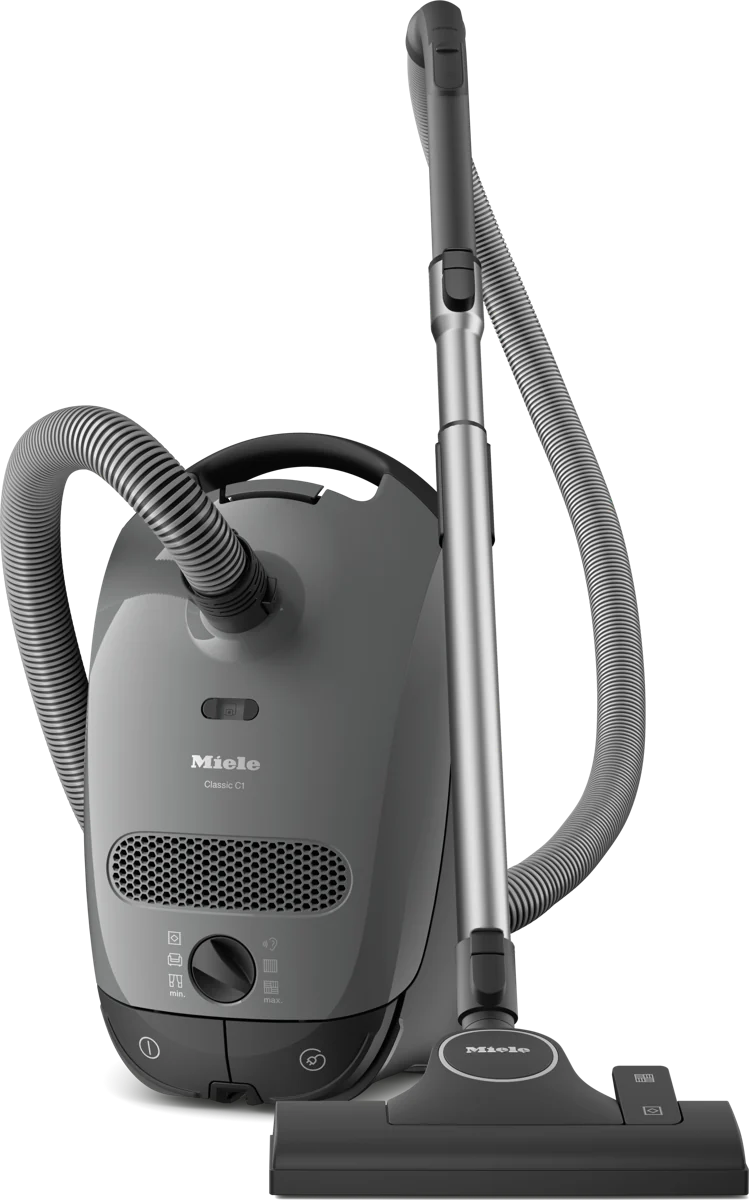
7. Miele Classic C1 Pure Suction SBAN0 — Bagged non-powered floor-tool route
Key features
- Non-powered combination floorhead
- Six-position suction selector
- Bagged canister with separate wand
- GN bag system and onboard small tools
Miele Classic C1 Pure Suction SBAN0 pairs a bagged body with a non-powered combination head. The useful distinction on tile is the actual floor tool and adjustable suction, rather than a claim that a particular motor is uniquely suited to grout. Its six-position selector lets the user change the setting deliberately.
A canister can be convenient for a large dry floor because the wand carries less equipment than a motor-and-bin stick. Keep the body’s route clear around chair legs and avoid pulling it sharply into furniture or tiled steps. Switch to the appropriate small tool for edges that the floor nozzle cannot reach.
Choose C1 instead of Zing if its bagged disposal and staged controls better fit your routine and running-cost preference. Choose a powered-head package for other carpeted rooms only when that carpeting needs and permits it; Pure Suction itself does not include an electric carpet nozzle. This exact package distinction prevents paying for the right brand with the wrong cleaning setup.
Reasons to consider it
- Bagged non-powered floor-tool route
- An identified model and cleaning configuration
Trade-offs
- Pure Suction package is not a powered-carpet system
Manufacturer information for Miele Classic C1 Pure Suction SBAN0.
8. Kenmore Elite 700 Series 81714 — Mixed surfaces and hose-based cleaning

Key features
- Bagged canister with separate floor tools
- Variable suction and powered carpet cleaning
- Pet-focused above-floor tool package
- Use the non-powered tool for delicate rugs
Kenmore 81714 suits readers who prefer a canister body with a wand and separate floor tools. The hose can be useful around furniture and along room edges, while the bagged format may suit people who dislike emptying a loose-dust container. Confirm the hard-floor attachment included in the package.
The canister and hose need more storage and may be less convenient for a very small kitchen than a ready-to-use stick. Use the appropriate floor nozzle rather than assuming a powered carpet head is the right tool for every tile surface. Include replacement bags and filters in the ownership cost, and follow the manual when changing between flooring types.
Reasons to consider it
- Mixed surfaces and hose-based cleaning
Trade-offs
- Larger storage footprint than a cordless stick
Manufacturer information for Kenmore Elite 700 Series 81714.
Choose for tile, grout and the rest of the home
Choose the floor head before comparing power figures
Loose grit, rice, pet hair, and fine dust present different pickup challenges. A suitable hard-floor head should move comfortably and collect debris without repeatedly scattering it. Input watts, air watts, and pascals measure different things; none is a universal score that makes unlike vacuums directly comparable. If crumbs shoot away from the head instead of entering the bin, use our guide to why a vacuum scatters dirt on tile to check the brush setting, head and airflow before replacing the machine.
For technique and cleaning order, read how to vacuum tile floors.
Match the format to the tiled area
A cordless stick is convenient for frequent small jobs. A corded upright or canister can be more practical for long sessions and mixed flooring. A robot helps maintain accessible areas, but it still needs preparation and manual help around awkward edges. Count storage and maintenance time as part of convenience.
If your home also has resilient flooring, compare our guide to vacuums for vinyl floors.
Separate vacuuming from grout and spill cleaning
Remove dry loose grit first, then use a surface-approved method for sticky residues and grout stains. Do not use a dry vacuum to extract water. Natural stone may require different cleaning products from ceramic or porcelain, so follow the flooring supplier’s directions rather than a universal cleaning recipe.
Avoid using one setting everywhere; learn how to vacuum different types of flooring.
Diagnose scattering before replacing the machine
If a head throws crumbs forward or sideways, check how they are contacting the brush or nozzle opening. A fast pass, rotating brush or low-clearance inlet can move a large crumb before airflow draws it in. An obstruction or packed filter can also reduce collection.
Stop and check the machine using its maintenance instructions. Then try the appropriate floor setting and a slow controlled pass over suitable debris. Use a small tool for an edge that the main head cannot reach rather than repeatedly pushing the same crumb around.
A non-powered combination head is a useful alternative for some dry tile routes, while a powered head can serve other permitted floors. The guide includes both formats so the choice addresses the real problem. Our tile-scatter diagnostic guide gives a more focused sequence.
Treat recessed grout as an access problem
The floor head may bridge a grout line while the debris sits below its contact surface. A compatible narrow tool can improve access around edges or deeper accessible recesses, but it should not be scraped forcefully along grout or a delicate glazed edge.
If material is bonded into the grout, dry suction may not be the right removal method. Follow the tile and grout supplier’s instructions for appropriate cleaning. A stronger vacuum does not replace the chemistry or technique required for a stain, and abrasive scraping can create damage.
For a large tiled room, use the normal permitted floor tool for the main area and reserve detailed work for the places that need it. This is usually more practical than cleaning every line with a tiny nozzle. Choose a machine with accessible useful tools rather than a very large accessory count.
Compare straight suction and powered agitation
Zing 2156A and C1 Pure Suction provide identified non-powered combination floor-tool routes. Their relevance is the cleaning configuration: the nozzle collects suitable dry debris without a rotating main brush. That can simplify a tile-focused routine where agitation is unnecessary.
A powered head may still be appropriate for a compatible mixed-floor home. Inspect its mode, contact strips and wheel condition and follow the tile maker’s instructions. A pet-hair or multi-surface label does not establish that every finish or decorative tile can tolerate the same head.
If a powered head repeatedly scatters the particular debris you collect, compare a supported brush-off mode or an appropriate separate tool before buying a different motor body. The actual floor-contact and airflow arrangement often supplies more useful information than the headline electrical rating.
Distinguish dry cleaning from washing
The dry sticks and canisters in this list do not collect liquid. A robot with a mop attachment has a specified damp-cleaning method, not permission to drive through an arbitrary spill. Keep those limits clear when choosing a machine for kitchens or bathrooms.
Remove loose grit before a permitted washing step so it is not pushed around beneath a pad or brush. Use the approved solution and moisture level for the tile, grout and adjoining surfaces. A wet surface or recently treated grout may require a different wait or care method.
Our tile-floor vacuuming guide covers preparation and edges. If a film remains after loose debris is gone, inspect the washing method rather than interpreting the film as evidence that the dry vacuum needs more suction.
Choose battery capacity around the complete route
A cordless stick can be convenient for an entrance, kitchen and a few local messes. Add the furniture and edges you expect to clean before comparing manufacturer runtimes. The maximum with a small non-powered tool is not the same specification as powered-head floor cleaning.
A corded canister provides continuous operation within its cable reach but adds a trailing body and hose. Check outlet placement, furniture turns and the way you will move between rooms. The upright format can suit a mixed-floor home where compatible carpet is a large part of the task.
For an open tile-only route, paying for extensive carpet equipment may add little. For tile downstairs and substantial carpet upstairs, it may make the whole purchase more useful. Compare the home’s hardest repeated job as well as the surface named in this guide.
Evaluate robot docks as part of the room
S7 MaxV Ultra has more equipment than a simple charging puck. Allow the dock’s documented clearance, access to tanks and bags and a suitable protected location. A station hidden where its maintenance parts cannot be removed is an inconvenient installation even if the robot itself fits under furniture.
Map controls can help direct a cleaning route, but the reachable area must still be prepared. Clear cords, unsuitable sharp material and liquids, and keep a physical plan for drops and forbidden areas. Do not assume that a saved map recognizes every temporary change in a kitchen or utility room.
A robot can reduce recurring floor work while a manual tool handles corners, edges and furniture. That division of labor is more realistic than expecting one automatic run to demonstrate that every grout line and hidden recess has been cleaned.
Inspect wheels after entrance-area cleanup
Entrance grit can cling to wheels and small front casters, especially where hair has already restricted their movement. Before continuing across a delicate tile finish, switch off and inspect the contact surfaces as the manual permits. Remove lodged debris and verify that wheels turn freely.
Use the same inspection when changing to a rug or another floor. A clean compatible head and the same head carrying a hard fragment are different conditions. This guide therefore does not assign a scratch-proof label to a machine based on its brush alone.
When storing the vacuum, keep the head and tools in a way that does not distort bristles or trap damp material. A ready, maintained floor tool is part of effective tile cleaning. It is often a more useful ownership priority than another accessory that will rarely be used.
Frequently asked questions
Do tile floors need a special vacuum?
Usually the correct hard-floor tool and settings matter more than a tile-specific label. Check compatibility with the finish and keep the head and wheels clean.
Will a vacuum restore stained grout?
It can remove loose particles from accessible grout lines. Embedded stains or residues normally require a separate, suitable cleaning method.
Should I choose a robot or a stick?
A robot suits scheduled maintenance on accessible floors. A stick is more flexible for spot cleaning, edges, furniture, and above-floor tasks.
Which choices are not dependent on a powered floor brush?
BISSELL Zing 2156A and Miele Classic C1 Pure Suction have non-powered combination floor tools. Kenmore 81714 also offers separate tools for different jobs. Select the appropriate supported configuration rather than assuming every canister uses straight suction.
Can grout pickup be ranked from suction pressure alone?
No. The nozzle opening, airflow, access to the recessed material, filter condition and the debris itself all affect collection. This guide does not present measured grout-pickup rankings because comparable tests were not performed.
Final recommendation
Choose by the job beyond the tile as well as on it. Zing and C1 offer non-powered dry floor-tool routes; LVAC-200 and Dyson V8 favor quick cordless handling. Kenmore or the Dyson upright makes more sense when substantial compatible carpet is also involved. Keep a crevice tool available for edges and use the floor-approved wet method only after loose grit is removed. Read the tile-scatter checks before replacing a working vacuum.

Abi Khan is the founder and a content writer at GlobVacs. His published work covers vacuum-cleaner buying guides, product comparisons and practical maintenance advice. Read his author profile and selected articles.