
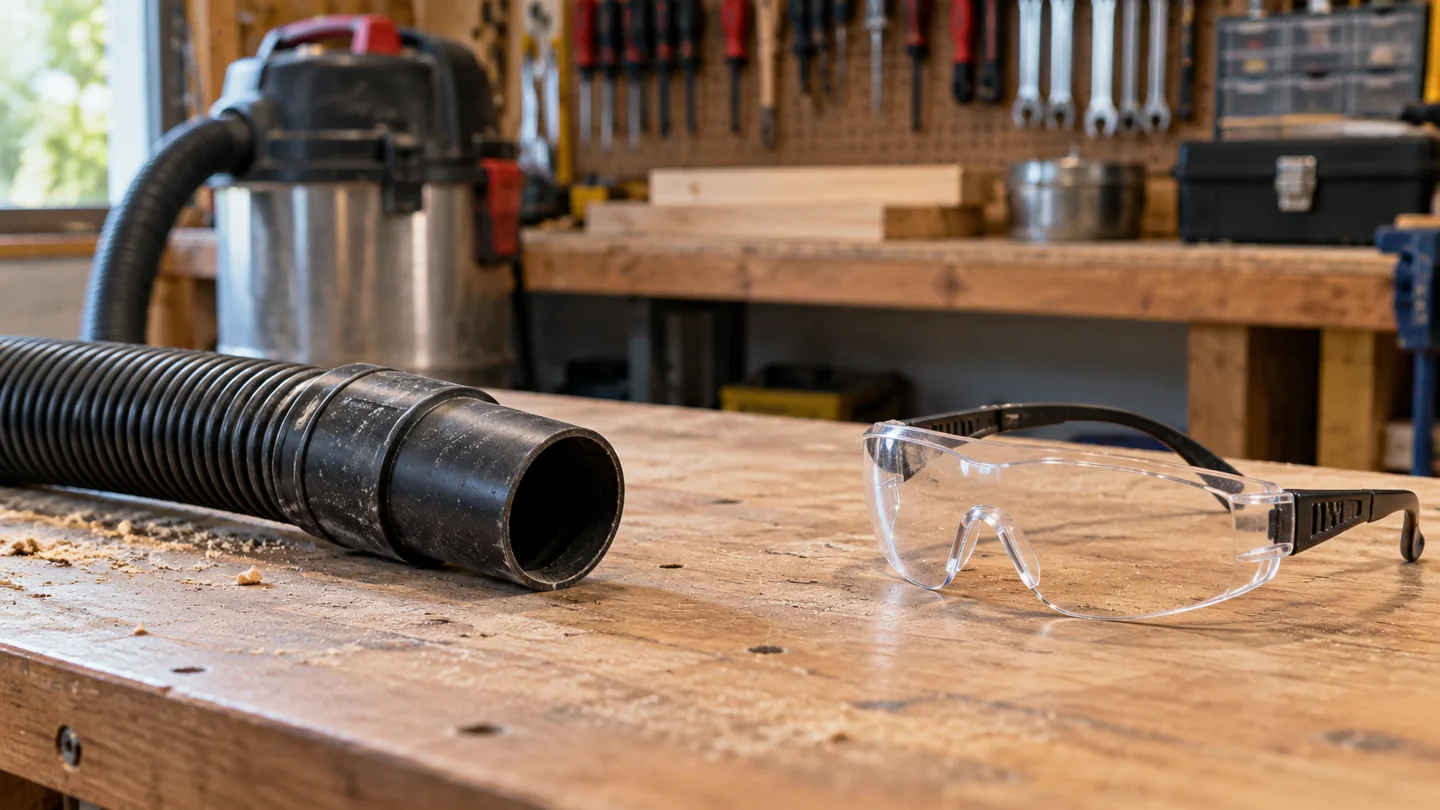
Never put a running vacuum nozzle against your eye or use suction on any part of your face. The sources reviewed for this article do not establish the sensational claim that an ordinary household vacuum will inevitably pull an eyeball out. That uncertainty does not make the action safe: suction exposure and direct contact can injure an eye, and an injury can threaten vision without the eye leaving its socket.

If exposure has already happened and there is pain, blurred or reduced vision, bleeding, marked swelling, or another concerning change, seek urgent medical assessment. Do not repeat the experiment, rub the eye, press on it, or try to diagnose the injury with a pressure calculation. Use emergency services for a serious injury or immediate danger.
Why the question needs a careful answer
There are two separate claims: whether suction can harm the eye, and whether a particular vacuum will completely displace it. Evidence for one does not automatically establish the other. The vacuum model, nozzle, seal, contact, exposure, and individual circumstances cannot be reduced to a universal yes-or-no demonstration.
A published clinical report, “Suction-induced retinopathy: optical coherence tomography correlations”, describes eye injury after exposure to negative suction pressure. A case report demonstrates that harm can occur in the reported circumstances; it does not supply a household “safe suction” threshold or establish the outcome of every vacuum exposure.
The practical advice is therefore direct: do not test suction on eyes, and get appropriate care after a concerning exposure. You do not need proof of the most extreme possible injury to recognize that an eye is not a suitable test surface.
Claims removed from the earlier article
Earlier text attributed eye-removal experiments to a television program and described eggs, a cow carcass, and a vacuum chamber without a verifiable supporting source. Those accounts should not have been presented as established evidence. They have been removed.
An egg, grape, balloon, or other household object is not a validated model of a living human eye and its surrounding tissues. Even a dramatic demonstration with such an object cannot tell a reader whether a real exposure is harmless or what treatment is needed.
Likewise, a vacuum chamber experiment and a household cleaning nozzle are different setups. Mixing them together can create an alarming story while obscuring the useful safety message.
What to do after an incident
- Stop the exposure. Switch the appliance off if it is safe and keep the nozzle away from the face.
- Do not rub, press, or manipulate the eye. Do not try to push tissue into place or remove an embedded object.
- Seek urgent assessment for symptoms or suspected injury. Explain that suction or direct nozzle contact was involved.
- Give the clinician the relevant details. Describe the appliance, approximate timing, which eye was affected, and any changes in vision or appearance.
- Follow professional instructions. Do not delay care while searching for an online demonstration that seems to match the event.
The National Eye Institute’s first-aid guidance says not to rub when particles enter the eye and not to remove an embedded object or put pressure on it. Different injury mechanisms need different first aid, so an instruction for loose dust should not be applied indiscriminately to a visibly injured eye.
Symptoms that should not be dismissed
Vision changes, significant pain, bleeding, a visibly abnormal eye, or symptoms after direct trauma need prompt professional attention. A person cannot reliably rule out injury by looking in a mirror or deciding that the exposure was brief.
If a child was involved, an adult should arrange assessment rather than relying on the child to describe the event precisely. Record what happened without reenacting it. Do not ask the child to demonstrate the nozzle position again.
For a serious injury, emergency clinicians can arrange the appropriate eye assessment. The American Academy of Ophthalmology’s EyeWiki overview of eye trauma emphasizes avoiding pressure and manipulation when a serious open-eye injury is suspected. Its clinical procedures are for trained professionals, not home treatment.
Why a suction number does not make an experiment safe
Vacuum advertisements may quote pascals, kilopascals, air watts, or electrical watts. These figures do not provide a medical safety rating for contact with the body. Their test locations and conditions may also differ between products.
A simple calculation using advertised pressure and nozzle area leaves out the actual contact, seal, changing airflow, tissue response, and injury mechanism. Do not use such a calculation to choose a “safe” distance or exposure time.
Our guide to vacuum suction measurements explains the cleaning specifications. It should be used to understand equipment terminology, not to estimate what an eye can tolerate.
Use safe ways to check a vacuum’s performance
Follow the manufacturer’s normal troubleshooting procedure. With power disconnected, inspect the collection level, required filters, accessible airway, tool connection, and brush condition. Use permitted debris on an appropriate floor only when the machine is correctly assembled and has no unresolved fault.
Do not seal a hose against skin, place it near the face, or use a pet or child as part of a demonstration. Do not look closely into a running nozzle to find a blockage. Disconnect power and use a flashlight for accessible inspection instead.
For a weak-pickup problem, start with vacuum maintenance and hose-blockage checks. These address the cleaning system without exposing eyes or skin to suction.
Make the cleaning setup safer around children
Keep running tools under adult control and store the appliance so children cannot easily activate it or play with attachments. Disconnect power before leaving it for maintenance. A nozzle may look like a toy, but its intended purpose is collecting suitable debris from compatible surfaces.
Keep hair, loose clothing, fingers, and faces away from powered brushes and intakes. A brushroll can create contact hazards separate from suction. Do not invite a child to touch the roller to check whether it is spinning.
If a video or social-media challenge suggests using a vacuum on the body, do not copy it. Editing, props, omitted context, or the absence of an immediate visible injury cannot establish safety.
Frequently asked questions
So is the answer definitely yes or definitely no?
The evidence reviewed here does not justify a universal prediction that a household vacuum will pull an eye out. It does support treating suction exposure as a potential injury. Avoid the experiment and seek care when exposure causes symptoms or concern.
Is a small handheld vacuum harmless?
Do not use size, price, or a lower advertised specification as permission to apply suction to an eye. Household cleaning tools are not designed or validated for that purpose.
Can I wait if the eye looks normal?
Appearance alone does not establish that the eye is uninjured. Get urgent medical advice for pain, vision changes, significant exposure, or any concern after contact. Do not use an online article to rule out an injury.
Can I remove dust from an eye with a vacuum?
No. Do not use a vacuum or another suction device. Follow appropriate eye first aid and seek professional help for persistent symptoms, an embedded object, or suspected injury.
The useful safety message
Keep vacuum suction away from eyes and faces. Avoid unsupported dramatic claims, avoid home experiments, and let an appropriate clinician assess a suspected injury. For equipment questions, use the owner’s manual and normal maintenance procedures.
Further reading

Katy James contributes vacuum-cleaner explainers and practical cleaning guidance at GlobVacs. Her published topics include robot-vacuum operation and vacuum airflow. Read her author profile and selected articles.