
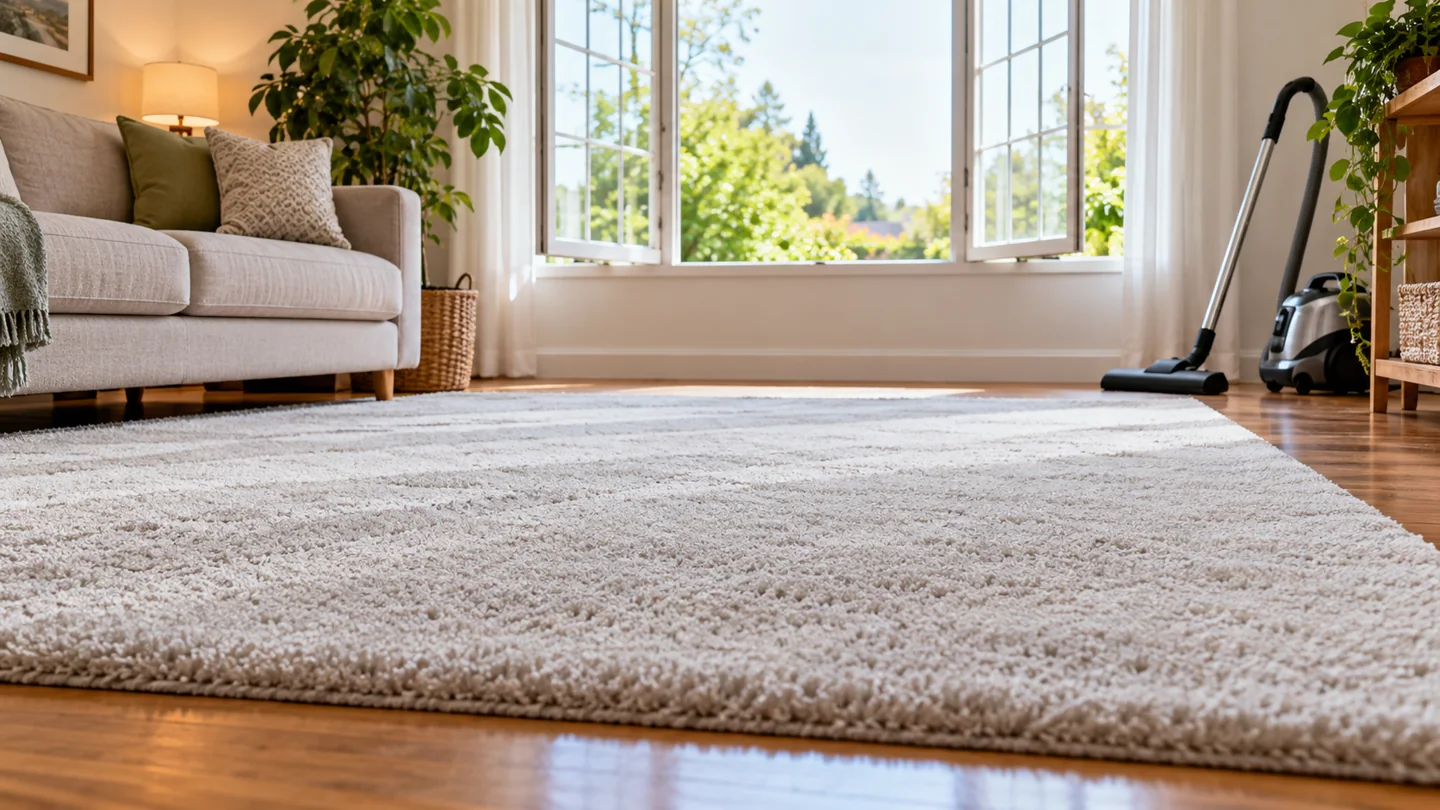
Wait until the carpet is appropriately dry and the cleaning provider or product instructions allow vacuuming before using an ordinary dry vacuum. There is no universal six-hour, twelve-hour, or next-morning rule. The cleaning method, carpet and cushion, amount of moisture, room conditions, and aftercare instructions determine readiness.

Ask the cleaner when and how to vacuum after the specific treatment. Some systems include a final vacuuming stage once dry; other work has different aftercare. Do not use a household dry vacuum to speed drying or recover remaining wash water.
Readiness matters more than elapsed time
A clock tells you how long it has been since cleaning, not whether every relevant part of the installation is dry. A carpet’s surface can feel different from the backing or cushion beneath it. A cool room or limited airflow can change drying compared with the cleaner’s expected conditions.
Follow the provider’s instructions for access, ventilation, furniture, and vacuuming. If the carpet remains damp beyond the expected window, contact the cleaner rather than treating a generic online estimate as permission to proceed.
Do not repeatedly press tissues or tools into the carpet as a substitute for a professional moisture assessment where there is significant wetness or uncertainty.
What changes the drying period?
| Factor | Why it matters |
|---|---|
| Cleaning method | Different systems apply and recover different amounts of moisture or compound |
| Application and recovery | Excess liquid or incomplete extraction can extend the process |
| Carpet construction | Pile, backing, installation, and cushion affect retained moisture |
| Airflow and humidity | Room conditions influence drying |
| Furniture and coverings | Items placed too soon can restrict airflow or create marks |
| Water exposure outside routine cleaning | A leak or flood needs a different assessment from an ordinary clean |
Do not solve every slow-drying situation by increasing heat. Use the permitted drying arrangement and keep electrical equipment safe around moisture.
Hot-water extraction is not a fixed waiting time
Hot-water extraction applies a controlled process and recovers cleaning liquid. It is often called steam cleaning, but that name does not establish one exact drying interval or make it equivalent to a household steam mop.
Ask the cleaner what conditions their estimate assumes and what to do if the floor is still damp. Keep the work record and aftercare instructions, especially where a carpet warranty requires a particular method.
Do not run a dry vacuum over a damp area to “pull out the last moisture.” Use only equipment rated and appropriate for liquid recovery, and only as part of a permitted cleaning or restoration process.
Low-moisture and compound systems have their own finish
Some cleaning processes call for a final vacuum after the carpet and applied material reach the specified condition. The correct sequence comes from that system, not from a general claim that all dry cleaning takes one or two hours.
For example, the CRI listing for a specific low-moisture cleaning system includes final vacuuming after complete drying. That is a process-specific example, not permission to use any powder or vacuum it at an arbitrary time.
Confirm the appropriate vacuum type and collection or filter requirements for the prescribed material. Do not assume every household vacuum is suitable for every cleaning compound.
Spot cleaning can leave one damp area
If only a stain was treated, the surrounding carpet may already be dry while the spot remains damp. Keep an ordinary dry vacuum away from that patch until it is ready and the treatment instructions permit vacuuming.
Do not add another home mixture because the area still looks different during drying. Record the product, amount, and treatment, then reassess according to the instructions. Some appearance changes need a residue or stain review rather than more liquid.
See turmeric stain handling and soap-residue removal for separate spot-treatment questions.
Prepare for the first ordinary vacuuming session
- Confirm the aftercare instructions. Check the treatment, readiness, tool, and any exclusions.
- Resolve unusual dampness. Contact the provider if drying is not proceeding as expected.
- Inspect the vacuum. Check the collection level, correctly fitted filters, clear intake, and compatible head.
- Choose carpet-approved settings. Do not assume maximum brush action is required after cleaning.
- Work gently and inspect. Stop for unusual resistance, pulled fibers, wet pickup, or an unexpected change.
Follow the carpet’s construction-specific care requirements. Wool, loops, shag, and delicate rugs can need different heads. Our floor-by-floor guide links to those details.
What if the carpet feels crunchy or sticky?
Texture can be affected by residue, dried material, pile condition, or damage. Do not assume every crunchy patch is harmless cleaner waiting to be vacuumed, or that more suction will correct it.
Tell the cleaning provider where it occurs and what was used. Follow the prescribed finish, and stop if the condition persists. Repeated wetting and vacuuming cycles can add moisture without resolving the cause.
Read crunchy-carpet troubleshooting for the diagnostic questions.
Persistent moisture and mustiness need attention
Contact the cleaner promptly if the carpet remains unexpectedly damp, develops a musty odor, or appears affected by a leak. Significant water exposure can involve cushion, backing, and underlying materials rather than only the visible pile.
The EPA’s mold-cleanup guidance explains why moldy porous carpet can require removal. Do not treat suspected mold with fragrance, a sprinkle-on powder, or ordinary household vacuuming as a cure.
For contaminated water or widespread damage, obtain appropriate restoration advice. A routine “when can I vacuum?” article is not a water-damage remediation plan.
Plan future care around the actual carpet
Keep routine dry soil removal separate from deeper cleaning. Use the manufacturer’s care requirements and actual traffic to decide frequency. Do not wait for every room to look dirty if entrance grit is already accumulating.
The CRI checklist for hiring a professional includes useful questions about preparation and the process. Ask about aftercare before the job begins so you can plan room access.
Our carpet-care guide and vacuuming schedule guide connect those ongoing tasks.
Frequently asked questions
Can I vacuum the next morning?
Only if the carpet is ready and the treatment instructions allow it. Overnight elapsed time is not a guarantee of complete drying.
Can a robot run while the carpet dries?
Keep a dry-only robot away from damp carpet. Disable or adjust the schedule and use a supported boundary until the area is ready.
Can I use the vacuum to dry the carpet?
Not an ordinary dry vacuum. Follow the provider’s drying process and use only appropriate rated equipment where needed.
Will vacuuming remove every post-cleaning mark?
No. Residue, staining, pile change, or damage may need a separate assessment. Report persistent changes to the cleaner.
Follow the finish for the method used
Wait for appropriate drying, follow the actual aftercare sequence, and use a maintained carpet-compatible vacuum. If moisture or texture remains unusual, resolve that issue before returning to the normal schedule.
Further reading
Will Vacuuming a Spider Kill It?

Abi Khan is the founder and a content writer at GlobVacs. His published work covers vacuum-cleaner buying guides, product comparisons and practical maintenance advice. Read his author profile and selected articles.