
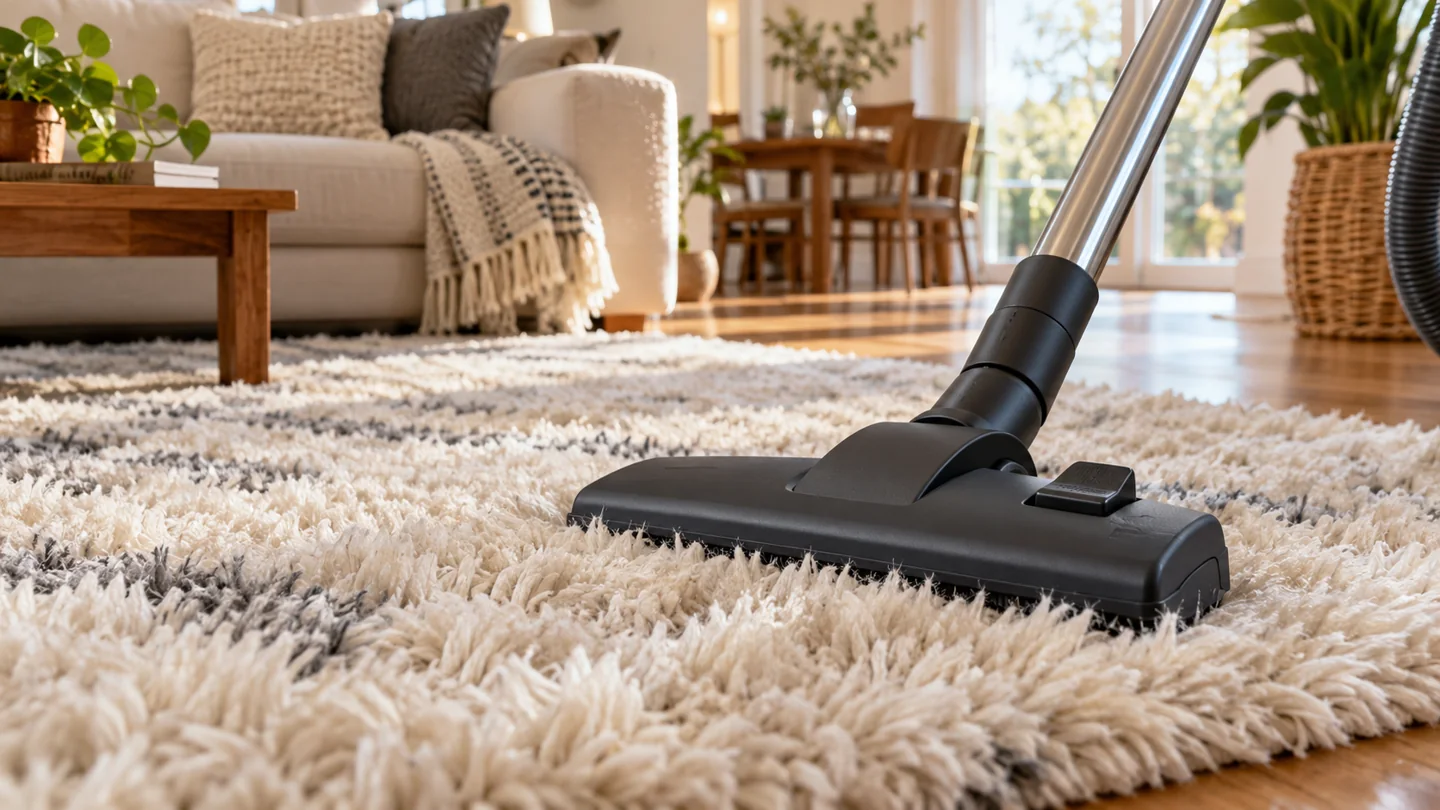
Vacuum a shaggy rug using the tool, suction level, and brush action its care label permits. Many shag products call for low suction and no rotating beater bar, but the exact rug instructions decide the method. Start gently, keep fringe and loose yarn away from the intake, and stop if the nozzle grips, pulls fibers, or stalls.
A powerful motor and a high floorhead setting do not automatically make a vacuum suitable for long pile. The head needs to move without damaging the rug while collecting useful debris. This guide helps you identify the rug, prepare the area, and clean it without forcing an unsuitable machine.
Read the label before choosing a head
Find the rug’s fiber, construction, backing, and care instructions. Synthetic shag, wool, mixed textures, washable rugs, and handmade products can need different treatment. A washable label does not automatically permit every vacuum brush.
For example, Rugs USA’s care instructions for a specific shag rug call for low-setting hand vacuuming without a beater bar. Use that as a product example, not as proof that every shag rug has identical instructions.
If the label is missing, contact the seller or manufacturer before using aggressive agitation, liquids, powders, or solvents. Valuable or delicate rugs may need specialist care.
Choose the controls that matter
| Feature | Why it can help | Limit |
|---|---|---|
| Suction control | Reduces the tendency to grip or lift the rug where permitted | Lowest power is useful only if it still collects debris |
| Brush shutoff or approved suction tool | Avoids prohibited rotating agitation | Not every hard-floor mode stops the brush |
| Suitable head clearance | Lets the tool move across long pile | One highest setting is not correct for every vacuum |
| Compatible upholstery or gentle attachment | May provide controlled small-area cleaning | Use only where the rug and vacuum instructions allow it |
Do not remove a required roller or cover to create an improvised head. If the vacuum cannot use a permitted configuration, choose another suitable tool.
Step 1: prepare the rug and surrounding floor
Pick up larger objects, hard fragments, cords, and small toys by hand. Check for liquid or sticky patches; an ordinary dry vacuum is not the tool for those. Keep pets and children away from the active cleaning area.
Inspect the rug for loose loops, pulled strands, damaged backing, curling edges, and fringe. Do not cut a yarn or edge as a vacuuming shortcut. Ask the maker or a rug professional how to address damage.
Check any rug pad for floor compatibility and stability. A pad can help some rugs stay in place, but the material must suit the rug and the floor beneath it.
Step 2: inspect the vacuum
With power isolated, check the head, wheels, opening, and permitted contact strips. Remove ordinary trapped debris and confirm covers and required filters are fitted. A hard fragment under a tool can damage the surrounding floor when you leave the rug.
Check the collection level and accessible airflow path. Weak pickup caused by a full bag, loaded filter, or obstruction is not a reason to press harder into the pile.
Use the vacuum-maintenance guide if the machine needs attention before you begin.
Step 3: test a small permitted area
Select the rug-approved configuration and begin gently on a small area. Watch the pile and how the head moves. Stop if the rug lifts into the nozzle, the head feels stuck, fibers pull, or a powered component stalls.
Adjust only within the rug and vacuum instructions. Some tools have a suction-release control that changes resistance; others use different settings. Do not assume more resistance means more effective cleaning.
A short trial checks handling where the method is already permitted. It does not approve a rotating brush that the care sheet prohibits.
Step 4: work slowly without forcing the pile
Use controlled passes over the accessible surface, following any directional guidance from the rug maker. Lift and reposition the tool where that is the approved method rather than dragging it through a tangle.
Keep fringe, tassels, and loose decorative edges away from the intake and rotating parts. Do not hold fringe down with your hand beside a powered head. Use a separate permitted gentle method for the edge.
If a patch still contains hair or grit, reassess the tool and method. Repeated aggressive passes can create damage without solving the pickup problem.
Should you vacuum the back or shake the rug?
Only use a back-cleaning or shaking method that the rug’s instructions permit. Consider size, weight, backing, the floor underneath, and safe handling. A large rug is not a convenient item to lift or beat over a railing.
If turning a permitted small rug releases debris onto the floor, collect that material with a surface-compatible method before putting the rug back. Keep the backing and pad correctly arranged.
Do not use a generic online tip to justify beating a fragile rug, washing an unsuitable backing, or wetting plant-fiber material. Ask a specialist where the construction is uncertain.
Hair, spills, and odors are different tasks
Loose hair may collect through gentle compatible vacuuming, while hair woven into long pile can need another rug-approved tool. Avoid scraping the rug with sharp or aggressive implements.
Blot a fresh liquid spill and follow the care label’s spot process. Do not add a universal vinegar, detergent, or essential-oil mixture. A persistent odor can involve moisture or contamination that dry pickup does not remove.
See carpet and rug cleaning decisions for the distinction, and baking soda and vacuum compatibility before using powders.
Can a robot vacuum clean shag?
Do not assume so. Check the robot’s pile limits, the rug’s brush restrictions, fringe, movement, and any mop-pad behavior. A robot that climbs onto the edge may still struggle across the surface or pull yarn.
Exclude an incompatible rug with the model’s supported boundary and clean it manually. Do not cover cliff sensors or force repeated attempts. Our robot-on-carpet guide explains the separate crossing, movement, and pickup tests.
How often should you vacuum?
Use the rug maker’s schedule and actual traffic as your starting point. Inspect busy areas and pet zones more often than a decorative rug in a quiet room. Remove suitable loose debris before it becomes a larger job.
Do not compensate for an unsuitable head by cleaning less carefully or more aggressively. A compatible repeatable method matters first. Our frequency guide helps organize the wider household routine.
When to get professional help
Ask for advice if fibers are pulling, backing is damaged, the rug remains dirty despite the approved method, or there is significant contamination or moisture. Tell the cleaner the fiber, construction, and products already applied.
The Carpet and Rug Institute’s rug-care information emphasizes using material-appropriate instructions and professional care for certain rugs. Do not treat every long-pile rug as a washable synthetic product.
Frequently asked questions
Should I always use the highest head setting?
No universal setting applies. Use the vacuum and rug instructions, and stop if the tool drags or pulls fibers.
Can a beater bar damage shag?
It can be unsuitable for some products. Follow the care label and do not use prohibited agitation simply because the motor is powerful.
Why does the rug lift into the nozzle?
The tool, suction, and rug combination may be unsuitable. Stop and choose a permitted lower-resistance configuration or another approved tool rather than forcing it.
Use control rather than force
Identify the rug, choose an approved gentle setup, keep loose edges clear, and assess the result. Protecting long pile is more important than making an unsuitable vacuum work through extra pressure.

Katy James contributes vacuum-cleaner explainers and practical cleaning guidance at GlobVacs. Her published topics include robot-vacuum operation and vacuum airflow. Read her author profile and selected articles.