
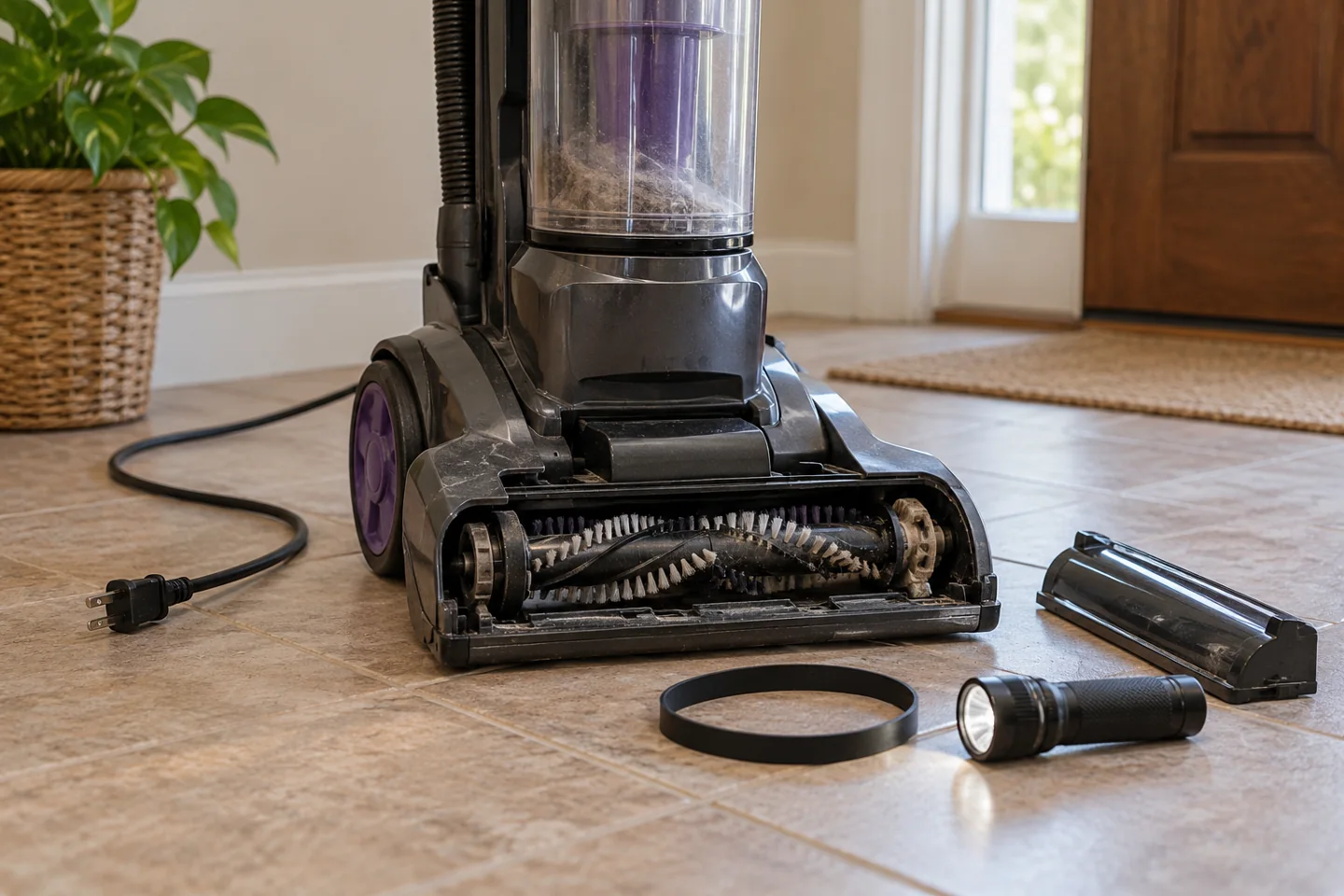
Stop using a vacuum that develops a burning smell. Switch it off and disconnect power if safe before checking anything. The odor may come from friction around a stalled brush or belt, restricted airflow, electrical damage, or a battery or charging problem. Smell alone cannot identify the fault, and continuing to run the machine can make an unresolved problem worse.
If you see smoke, sparks, melting, a swollen battery, or an active fire, move away from routine troubleshooting and follow the guidance for a smoking vacuum. A cooling period is not proof that an appliance with those symptoms is safe to restart.
Describe the symptom before choosing a repair
“Burning smell” can describe several different experiences. A rubber-like odor near the floorhead, a hot electrical odor from the body, and a musty smell from damp collected debris need different investigations. Do not put your face close to the exhaust or touch parts to identify the source.
Use what you already noticed before shutdown: where the smell appeared, whether the roller stopped, whether suction dropped, what material was collected, and whether the vacuum was cleaning or charging. This information is more useful than repeatedly switching the machine on to reproduce the odor.
| Observation | Possible area to investigate | Limit |
|---|---|---|
| Rubber-like odor and a stopped brush | Roller obstruction or belt/drive problem | Not every vacuum uses the same belt design |
| Weak pickup and a blockage indicator | Collection container, filter, or airway | Clearing a clog does not rule out damage after overheating |
| Electrical odor, damaged cable, or sparking | Electrical or motor fault | Stop use and arrange professional assessment |
| Odor while charging or heat around a battery | Battery, charger, contacts, or dock | Do not keep charging or remove a suspect hot pack |
| Damp or stale odor after wet debris | Moisture and contamination in a dry-only appliance | Drying the exterior does not establish electrical safety |
Check the brush area only after safe isolation
Hair, thread, cord, or a rug edge can obstruct a brushroll. With the machine safely disconnected and following the owner’s manual, inspect accessible areas for a tangle or trapped object. Do not pull on wiring, cut close to electrical connections, or open a sealed powered head.
If the roller is belt-driven, a drive problem may produce friction and an odor. A broken belt does not always affect suction generated by the main fan; it can mainly affect agitation and therefore carpet pickup. This is why “the vacuum still sucks through the hose” does not rule out a floorhead problem.
Use the exact approved replacement part if the manual permits a user repair. Check the roller and associated parts rather than replacing a belt blindly. Visible melting, scorching, damaged bearings, or a persistent odor calls for support before reuse.
Inspect the collection and airflow path
A full bag or bin, a loaded filter, or an accessible obstruction can reduce airflow. Check the collection limit and the way each component is installed. A bag that appears only partly full can still be loaded with fine dust, while a bin above its marked limit can interfere with separation.
Follow the model’s filter instructions individually. Foam, felt, pleated, motor-protection, and exhaust filters may have different care methods within one machine. Do not wash a filter because another filter in the same vacuum is washable. Refit washed parts only after the required drying process is complete.
For a detachable hose, follow the documented removal procedure and inspect it without power. Do not use a sharp coat hanger, screwdriver, or forceful improvised probe that could pierce it. Our hose-blockage guide explains a more controlled approach.
Some machines shut down through thermal protection. Use the manual’s procedure for the actual symptom. A standard blockage-reset instruction should not be assumed to cover a burning odor, smoke, or damaged components.
Electrical odors need a different response
Keep the appliance out of use if the smell appears electrical, the cord is damaged, the plug or socket shows scorching, or the odor comes from a charger or motor housing. Do not remove electrical covers or bypass switches, fuses, or protective devices.
The Electrical Safety First guide to plugs and cables explains the importance of checking visible damage. A cable repair needs the correct procedure and appropriate competence; covering damage with tape does not restore its original insulation and mechanical protection.
If the socket is suspect, stop using it and contact an electrician. If the appliance is suspect, contact the manufacturer or a qualified repairer. Testing a faulty vacuum in a different socket is not a useful household safety check.
Battery-powered vacuums: note whether the odor occurs during charging
For a cordless stick, handheld, or robot, record whether the smell came from the cleaning head, main body, battery, charger, or dock. These are different assemblies. Use the supplied or manufacturer-approved charging equipment and check the exact model compatibility of replacements.
Do not recharge a pack that is swollen, leaking, unusually hot, hissing, or otherwise damaged. Do not pry it out of its housing or open it. Contact the manufacturer for handling instructions, and seek emergency help for active smoke or fire.
A short runtime alone does not establish a battery hazard or explain a burning smell. Likewise, a new battery is not a guaranteed solution to an unidentified charging fault. Diagnose the complete system before buying parts.
Distinguish a burning odor from ordinary collected smells
Pet hair, food debris, damp dust, and contamination in a dirty bin can produce odors. They still need attention, but fragrance is not a repair. Do not add perfume, essential oils, deodorizing powder, or disinfectant to filters or the collection system unless the appliance instructions explicitly allow it.
If the machine collected a liquid despite being dry-only, stop using it and contact support. Running it until the smell disappears is not an appropriate drying procedure. The same caution applies after filter washing if moisture entered electrical areas.
When there is no unresolved fault, routine cleaning of permitted removable parts can address ordinary debris buildup. See how to clean a vacuum for the maintenance sequence, and match it to the model’s manual.
What to tell the manufacturer or repairer
- The full model number, approximate age, and whether it is corded or battery-powered.
- Where and when the odor appeared, including whether charging was underway.
- Any change in sound, pickup, brush rotation, warning lights, or error codes.
- Recent filter washing, parts replacement, liquid pickup, or use on an unusual material.
- Visible damage or discoloration, photographed only when safe.
Ask whether the manufacturer wants the machine left unplugged, brought for inspection, or handled through a warranty or recall process. Keep the receipt and do not discard potentially relevant parts before support advises you.
Use the exact product’s support directory. For example, Dyson’s vacuum support page separates product families and models. Instructions for a different model’s cleaner head, battery, or reset sequence may not apply to yours.
Prevent recurrence after the cause is resolved
Pick up larger objects before cleaning, use floor-compatible settings, maintain the roller, and keep the collection system below its stated limit. Check filters by their required procedure and inspect the power cord or charger during routine care.
Avoid forcing a head across a rug where it repeatedly stalls. Do not collect hot ash, flammable material, hazardous dust, or liquids with an ordinary dry vacuum. Use equipment rated for the specific task rather than relying on suction strength alone.
For a filter-specific schedule, read when to change vacuum filters. Maintenance intervals depend on the component, model, use, and collected material, rather than one universal monthly replacement rule.
Frequently asked questions
Can a new vacuum have a burning smell?
Do not assume a concerning odor is normal because the machine is new. Stop and check the manual or contact the seller or manufacturer, especially if there is heat, smoke, sparking, or a performance change.
Will taking a break fix the problem?
A break may allow parts to cool, but it does not identify or correct the cause. Follow model-specific advice and do not return an unresolved fault to use.
Should I replace the vacuum immediately?
Get the fault assessed first unless the manufacturer directs otherwise. The result may be a suitable repair, warranty action, or replacement. Do not sell or donate an unresolved faulty machine as working.
Further reading

Abi Khan is the founder and a content writer at GlobVacs. His published work covers vacuum-cleaner buying guides, product comparisons and practical maintenance advice. Read his author profile and selected articles.